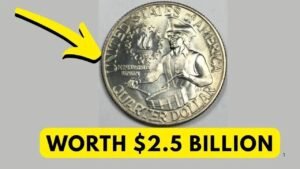
In the mid-1970s, the United States approached its 200th birthday with a spirit of reflection and celebration. This milestone wasn’t limited to parades or fireworks; it reached every citizen through a special coin: the Bicentennial quarter. Featuring a colonial drummer design, this quarter was a daily, tactile reminder of the nation’s founding journey. For most, it remained a simple 25-cent piece, yet certain rare iterations have captured the imagination of collectors, blending national pride, minting craftsmanship, and the allure of rarity.
A Coin Forged from Celebration
The Bicentennial quarter emerged from a deliberate act of public commemoration. In 1973, the U.S. Treasury invited the public to submit designs for new quarter, half-dollar, and dollar coins to mark the bicentennial. Art student Jack L. Ahr’s winning design replaced the traditional eagle with a colonial drummer, surrounded by a torch and thirteen stars symbolizing the original colonies. Struck in 1975 and 1976, all coins bear the dual date “1776-1976,” creating a bridge across two centuries. For two years, this design transformed everyday transactions into historical experiences.
The 1976 Bicentennial Quarter: A Reference Guide
| Aspect | Details | Note for Collectors |
|---|---|---|
| Years Minted | 1975 & 1976 (all bear “1776-1976”) | No single-date 1975 quarters were minted for circulation. |
| Designer | Jack L. Ahr (Reverse), John Flanagan (Obverse) | Selected from a public competition. |
| Standard Composition | Copper-nickel clad | Vast majority of circulated quarters. |
| Special Compositions | 40% Silver (Proof and Uncirculated sets) | Silvery appearance, no copper edge. |
| Mint Marks | “D” (Denver), “S” (San Francisco), None (Philadelphia) | “S” appears on collector issues. |
| Key Varieties | Doubled Die Obverse (DDO) | Errors where design shows doubling from misaligned die strike. |
| Realistic Value Range (Circulated) | 25¢ to $2-3 for uncirculated examples | Sentimental/historical value often exceeds monetary. |
| Record Public Sales | PR-70 1976-S Silver Proof quarters: $10,000–$15,000+ | Highest known condition and rarity. |
Understanding True Value: More Than Metal
While hundreds of millions of Bicentennial quarters were produced, their collectible value depends on multiple factors. Most remain worth face value, yet some carry a historical and financial premium. Key elements influencing value include:
Exceptional Preservation
A coin that retains its original sharp detail and luster, never entering circulation, is highly prized. Mint State (MS) grades above 67 are exceedingly rare, as most coins experienced normal wear.
Collector Editions
Special issues produced alongside circulating coins include:
- 40% Silver Proof Coins: Struck in San Francisco with an “S” mint mark on polished planchets, offering a mirror-like finish.
- 40% Silver Uncirculated Coins: Also from San Francisco, sold in collector sets without the proof finish.
Minting Errors
Occasional anomalies, such as the Doubled Die Obverse (DDO), create permanent design deviations visible in the date or lettering. These mistakes are highly sought-after by specialists.
Separating Fact from Folklore
Claims of “$85 million quarters” should be approached with skepticism. No Bicentennial quarter has ever been authenticated at such values. Myths often arise from misinterpreted auction results, rumors, or exaggerations. The authentic market is impressive yet realistic: PR-70 1976-S Silver Proof quarters have achieved high sales in the tens of thousands of dollars, representing the pinnacle of preservation, not mythical multi-million-dollar valuations.
How to Engage with Your Own History
If you discover a Bicentennial quarter, treat it thoughtfully:
- Examine Carefully: Check the drummer’s details and stars, and observe the edge for copper-nickel layers or solid silver in collector coins.
- Identify Mint Marks: Look for an “S” above the date for San Francisco strikes; pristine examples may be proofs or silver uncirculated coins.
- Search for Unusual Traits: Use a magnifier to spot doubling, blurring, or off-center strikes indicative of DDO varieties.
- Preserve, Don’t Scrub: Handle coins by the edges. Cleaning destroys surfaces and lowers collector value.
- Seek Expert Opinion: Consult a reputable coin dealer or grading service for professional assessment.
Frequently Asked Questions
Q: Is my regular 1976 quarter worth more than 25 cents?
A: Circulated copper-nickel quarters are generally worth face value. Historical and sentimental value may exceed this for collectors.
Q: How can I tell if my quarter is silver?
A: Check the edge. Standard quarters have a brown copper stripe; 40% silver coins have a solid silver-white edge and a distinct ring when tapped.
Q: What is the most valuable Bicentennial quarter I could realistically find?
A: Rare DDO varieties in uncirculated condition or pristine 1976-S Silver Proof quarters could be worth hundreds to several thousand dollars.
Q: Are all “S” mint mark quarters valuable?
A: Not necessarily. Value depends on composition, condition, and errors. Worn clad “S” quarters are typically only a few dollars.
Q: Why do exaggerated values circulate online?
A: Sensational claims attract clicks and engagement, often misrepresenting actual market values. Responsible collecting relies on verified auction results and professional grading.
Appreciating the Bicentennial Quarter
The Bicentennial quarter is more than currency—it is a symbol of national reflection, craftsmanship, and historical awareness. Whether appreciated for its symbolism, rarity, or the thrill of discovery, this coin connects everyday life with the broader American story, proving that even small objects can carry immense cultural and collectible significance.