Imagine discovering that an ordinary quarter in your pocket or tucked away in a drawer might be a hidden treasure. While most 1976 Bicentennial Quarters are worth their face value, a select few, thanks to unique production quirks and exceptional preservation, have captivated collectors with valuations reaching into the millions. Born from a national celebration, this coin represents a fascinating blend of American history, craftsmanship, and the thrill of discovery. For collectors and casual finders alike, it offers a tangible connection to the past and the extraordinary possibility that the ordinary can hide remarkable stories.
Celebrating a Nation: The Birth of the Bicentennial Quarter
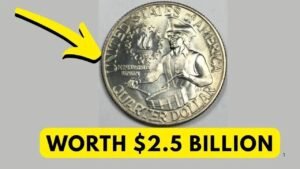
In 1976, the United States marked its 200th anniversary with nationwide celebrations, and the U.S. Mint joined the festivities by issuing special designs for the quarter, half-dollar, and dollar coins. The quarter received a distinctive update: artist Jack L. Ahr’s design replaced the traditional eagle on the reverse with a spirited colonial drummer, symbolizing the revolutionary spirit of 1776. The obverse retained John Flanagan’s familiar profile of George Washington, proudly displaying the dual date “1776-1976.”
Minted in the billions for circulation, this coin was intended as a piece of living history. Its mass production, however, created a fascinating paradox: the coin is both ubiquitous and, in select forms, extraordinarily rare. These rare variants, preserved under exceptional conditions or struck with errors, form the foundation of the high-value collector market.
1976 Bicentennial Quarter: Key Features
| Feature | Details |
|---|---|
| Obverse Design | George Washington (John Flanagan); inscriptions: “IN GOD WE TRUST” & “LIBERTY” |
| Reverse Design | Colonial Drummer (Jack L. Ahr); inscriptions: “UNITED STATES OF AMERICA,” “E PLURIBUS UNUM,” “QUARTER DOLLAR” |
| Dual Date | 1776-1976 |
| Standard Circulation Issue | Copper-nickel clad; mint marks: “D,” “S,” or none; value: 25¢ in worn condition |
| Special Collector Issues | 40% Silver Proof and Uncirculated (San Francisco); Copper-Nickel Proofs (San Francisco) |
| Key to High Value | Rarity, silver composition, uncirculated or proof condition |
| Expert Resources | Professional Numismatists Guild (PNG), American Numismatic Association (ANA), PCGS, NGC, ANACS |
The Alchemy of Value: From 25 Cents to a Collector’s Prize
Most Bicentennial Quarters are worth 25 cents, yet certain factors can dramatically increase value:
- Composition: Silver versions contain 40% silver and were sold in collector sets rather than for circulation. Coins with a silver appearance and no copper stripe along the edge are highly prized.
- Minting Errors: Off-center strikes, doubled design elements, or incorrect planchets create unique, sought-after specimens. These errors are rare and often command significant attention in the collector market.
- Exceptional Preservation: Coins graded in pristine, uncirculated condition or mirror-like “proof” coins can achieve substantial value. Standard circulation coins rarely maintain such flawless features.
- Rare Variants: Certain San Francisco Mint proofs with an “S” mint mark exist in very limited quantities. These ultra-rare coins, especially in top condition, are the ones that can reach headline-making auction prices.
While high-value coins in the seven-figure range exist, they represent a microscopic fraction of all Bicentennial Quarters. Most collectors can expect modest returns, but the pursuit and examination of these coins remain a rewarding experience.
Could You Find One in Your Change?
The likelihood of discovering a million-dollar quarter in daily change is extremely low, yet it is not impossible. Over decades, coins circulate, are stored, lost, and rediscovered. More realistic sources of potential treasures are inherited collections, old coin jars, or items acquired at garage sales and estate sales. The thrill lies in exploration, knowledge, and the careful observation of ordinary objects that may hide extraordinary stories.
Step-by-Step Guide to Examining Your Coin
- Observe Gently: Hold the coin under bright light. Confirm the dual date and drummer design. Inspect the edge for a solid silver-white appearance versus a copper-nickel stripe.
- Look for Unusual Traits: Check for off-center strikes, doubled details, or mirror-like surfaces indicative of proof coins.
- Research Before Acting: Compare your coin to documented error types using reputable numismatic references to avoid misconceptions.
- Seek Expert Opinion: If your coin appears rare, consult a professional dealer or grading service (PCGS, NGC) for authentication and grading.
- Preserve Its State: Never clean the coin. Handle by the edges and store in a protective holder to maintain its collectible value.
Beyond Metal: The Enduring Appeal
The fascination with the Bicentennial Quarter is more than financial—it is historical and cultural. This coin is a pocket-sized testament to America’s 200th birthday, capturing both artistry and a moment in time. For collectors, discovering a rare variant is a triumph of patience and knowledge. For casual observers, it offers a whimsical connection to history and a reminder that everyday objects can contain extraordinary stories.
Frequently Asked Questions
Q1: Is my 1976 quarter worth a million dollars?
A: Highly unlikely. Million-dollar valuations apply to an extremely small number of verified error coins or perfect-grade silver proofs. Most circulated coins are worth 25 cents.
Q2: How can I tell if my quarter is silver?
A: Check the edge. A copper-nickel coin has a visible copper stripe; a 40% silver coin has a solid silver-white edge with no copper.
Q3: What is a proof coin?
A: Proof coins are specially struck for collectors with polished dies and planchets, creating a mirror-like background and frosted details. Look for the “S” mint mark and exceptional finish.
Q4: I think I found an error coin—what should I do?
A: Research documented varieties first. If it matches a legitimate error, do not clean it. Store in a protective holder and seek appraisal from a reputable dealer.
Q5: Why is cleaning a coin harmful?
A: Cleaning creates microscopic abrasions and alters the natural surface, reducing collector value. Experts prize untouched coins for authenticity and historical integrity.
Final Reflection
The story of the Bicentennial Quarter is a celebration of American heritage and numismatic curiosity. While life-changing finds are rare, the true value lies in exploration, historical appreciation, and the thrill of discovery. This coin reminds us that history is not confined to books—it circulates among us, waiting to be noticed by those who look closely enough.