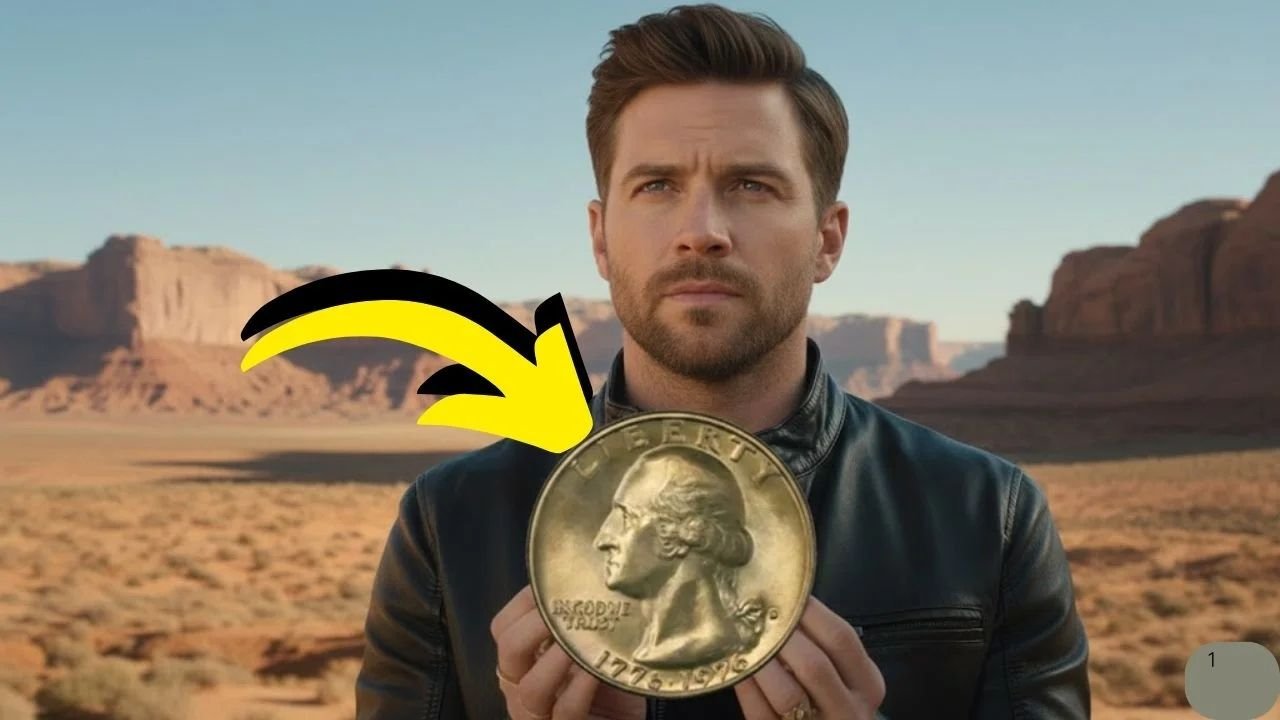
The dream of discovering life-changing treasure is universal. In the world of numismatics—the study of coins—that dream occasionally brushes against reality. Among modern legends captivating both collectors and casual observers is a Bicentennial Quarter reportedly valued at nearly $3.76 million. More fascinating than its staggering price is the slim possibility that such a coin could still be found in everyday circulation. This story isn’t just about wealth; it’s about the enduring allure of the hunt and the remarkable stories hidden in common objects.
The Historical Significance of a Commemorative Coin
To understand the fascination, one must first appreciate the coin’s origin. Released in 1975 and 1976, the Bicentennial Quarter celebrated America’s 200th anniversary. The U.S. Mint issued special designs for the quarter, half-dollar, and dollar. The quarter’s reverse, crafted by Jack L. Ahr, features a colonial drummer boy with a victory torch encircled by thirteen stars, representing the original colonies. The obverse bears the dual date “1776-1976,” linking the coin forever to the nation’s bicentennial. With hundreds of millions entering circulation, the Bicentennial Quarter became a familiar piece of recent history. Its ubiquity, however, makes the prospect of a rare variant all the more compelling.
The Bicentennial Quarter Phenomenon
| Aspect | Details |
|---|---|
| Coin Series | Washington Quarter, Bicentennial Design |
| Years Minted | 1975 & 1976 (all coins bear dual date 1776-1976) |
| Designer | Jack L. Ahr (Reverse – Drummer Boy) |
| Standard Composition | Copper-nickel clad (copper core with outer copper-nickel layers) |
| Special Mint Sets | 40% Silver (San Francisco Mint proof strikes) |
| Circulation Mintage | Approximately 1.7 billion from Philadelphia (no mint mark) & Denver (“D” mint mark) |
| Reported “Dream Coin” Value | ~$3.76 million (theoretical, for flawless coin with multiple errors & silver composition) |
| Realistic Valuable Variants | High-grade proofs (MS/PR-70), strong double die errors, or rare off-metal strikes |
| Core Message | Ultra-rare error coins may exist, but the true value is their place in American commemorative history |
Deconstructing the Multi-Million Dollar Valuation
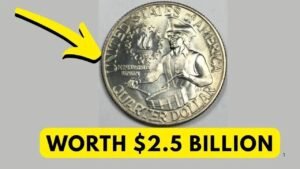
The $3.76 million figure is not tied to a standard copper-nickel Bicentennial Quarter. It refers to a hypothetical “super-coin” combining several extraordinary attributes. Experts suggest such a coin would include:
- Dramatic Minting Error: A strong double die obverse where design elements appear duplicated.
- Wrong Planchet Strike: Possibly struck on a blank intended for a silver dollar, altering weight and composition.
- Flawless Condition: Gem uncirculated, graded MS-68 or higher, showing no wear.
- Rare Silver Composition: Only used for special collector sets sold by the San Francisco Mint.
A coin combining these traits represents the “holy grail” of the Bicentennial Quarter series, with its multi-million dollar price rooted in this rare convergence of errors, materials, and preservation.
The Enduring Myth of Circulation Finds
Could such a coin still exist in circulation? While highly unlikely, numismatic history includes stories of incredible finds in bank-wrapped rolls or even ordinary change. Error coins, by definition, slip past quality control. A misstruck coin from the 1970s could have entered a bank bag and spent decades in circulation, unnoticed. This tiny possibility fuels the dream, transforming routine transactions into moments of potential discovery.
A Thoughtful Guide for the Curious Observer
If this story inspires you to examine your coins, approach it responsibly:
- Appreciate, Don’t Expect: View it as a journey of historical curiosity rather than a lottery.
- Look Closely: Examine the drummer boy design and the dual date for unusual features like off-metal strikes, doubling, or off-center alignment.
- Preserve Carefully: Never clean a coin. Place it in a protective holder.
- Seek Expert Evaluation: Reputable local coin dealers or professional grading services like PCGS or NGC can provide authentication.
Frequently Asked Questions
Q1: Is every Bicentennial Quarter worth more than 25 cents?
A1: No. Most Bicentennial Quarters were minted in the billions and are worth only face value. Exceptions arise from rare errors, proof strikes, or silver compositions.
Q2: What is the most common valuable Bicentennial Quarter error?
A2: The “Double Die Obverse,” where the lettering and date appear doubled, is the most well-known. Its value ranges from hundreds to several thousand dollars depending on condition, not millions.
Q3: How can I tell if my Bicentennial Quarter is silver?
A3: Check the edge: standard copper-nickel coins show a copper stripe; silver coins have a uniform silver-colored edge. Silver coins are slightly heavier.
Q4: Why shouldn’t I clean a coin?
A4: Cleaning removes natural toning and can leave micro-scratches, drastically reducing collector value.
Q5: Where are the best places to find interesting coins?
A5: Coin roll hunting at banks, estate sales, old piggy banks, and inherited collections. Patient and informed searching is more fruitful than relying on luck.
The Allure of the Everyday
The story of the multi-million dollar Bicentennial Quarter is less a financial guide and more a cultural tale. It reflects our fascination with hidden stories and democratized treasure. While the odds of finding such a coin are astronomically low, the act of searching enriches our connection to the ordinary. Each Bicentennial Quarter is a small metallic canvas celebrating a national milestone. Whether worth face value or a fortune, it represents a shared historical moment and a spark of curiosity waiting to be discovered.