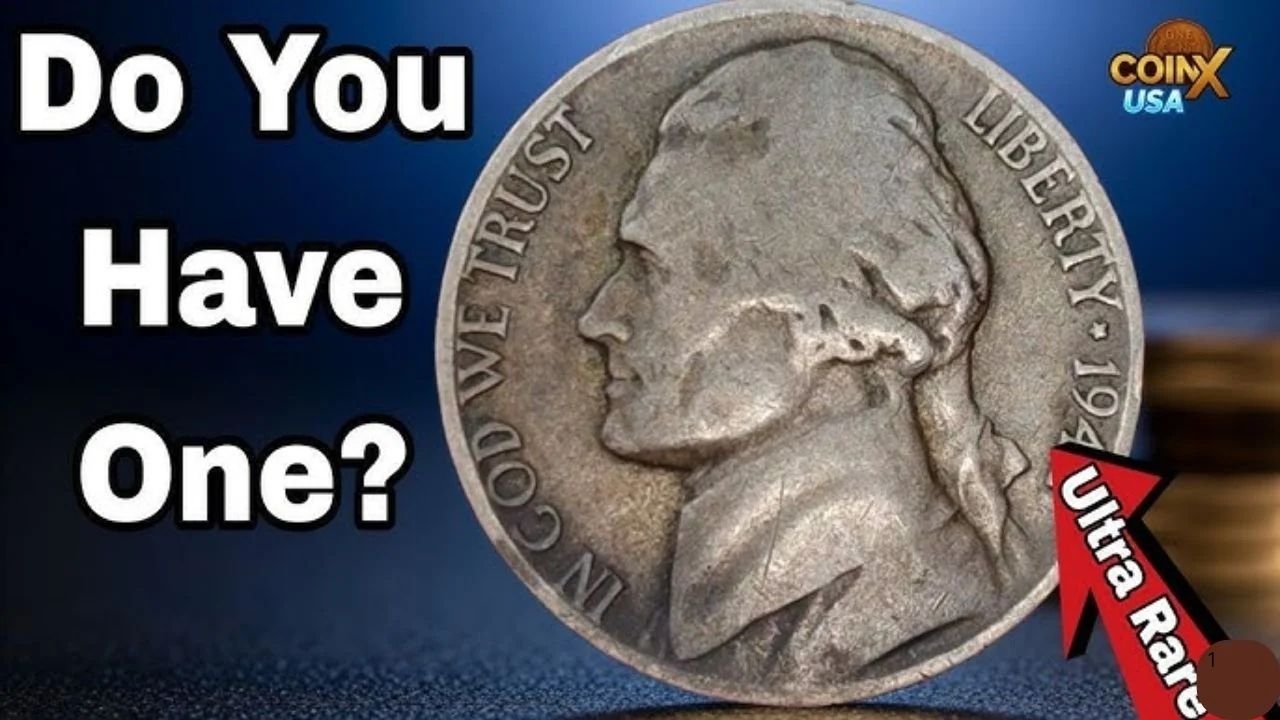
At first glance, a Jefferson nickel from the 1940s appears ordinary, no different from the countless five-cent coins that exchanged hands daily. Yet beneath this modest exterior lies a story shaped by global conflict, national sacrifice, and practical innovation. During World War II, even everyday objects like coins were influenced by the demands of a nation at war. The War-Era Jefferson Nickel stands as a lasting symbol of this period, valued not for its rarity at creation, but for the circumstances that necessitated its production and the historical narrative it carries today.
Why the Nickel Had to Change During World War II
As the Second World War intensified, the United States faced acute shortages of strategic metals. Nickel, essential for producing armor plating, weapons, and military vehicles, became a high-demand resource. To conserve it, the U.S. Mint made a critical decision in 1942: the composition of the Jefferson nickel was altered. From late 1942 through 1945, these coins were struck using a wartime alloy composed of 35% silver, 56% copper, and 9% manganese. This adjustment allowed the government to redirect nickel to the war effort while ensuring the continuity of everyday commerce—a practical, necessity-driven innovation rather than an attempt to create collectible coins.
War-Era Jefferson Nickel Overview
| Feature | Details |
|---|---|
| Years Minted | 1942–1945 |
| Reason for Change | Nickel conserved for wartime use |
| Metal Composition | 35% silver, 56% copper, 9% manganese |
| Identifying Mark | Large P, D, or S above Monticello |
| Historical First | Introduction of “P” mintmark on U.S. coinage |
| Collector Highlights | Full Steps, minting errors |
| Silver Content | Yes, adds intrinsic value |
A Small Design Detail That Made History
One of the defining features of the War-Era Jefferson Nickel is its mintmark placement. Unlike previous issues, the mintmark appears prominently above Monticello on the reverse side. Notably, the Philadelphia Mint issued a “P” mintmark for the first time in U.S. history, alongside the familiar “D” (Denver) and “S” (San Francisco). This subtle design adjustment reflects wartime adaptations and provides collectors with a clear and reliable method for identifying these special coins.
From Everyday Circulation to Collector Interest
Millions of War-Era nickels entered circulation, and for years they passed unnoticed. Over time, however, collectors began to recognize certain examples for their unique characteristics. Coins with sharply defined details, particularly the “Full Steps” on Monticello, became highly desirable. Wartime production often relied on worn dies and fast-paced minting, making such perfectly struck examples exceptionally rare. Additionally, minting errors like overdates and striking anomalies further increased the collectible value of these coins. When preserved well, a War-Era Jefferson Nickel can command prices far above its face value, with intrinsic silver content adding another layer of worth.
Why These Nickels Remain Significant
The War-Era Jefferson Nickel is more than a collector’s item—it is a tangible reminder of history. Each coin embodies the resourcefulness, adaptation, and national effort that characterized the United States during World War II. For numismatists, these nickels represent an accessible entry point into American coinage history, blending artistry, metallurgy, and a story of resilience. For history enthusiasts, they serve as physical evidence of how global conflict influenced even the smallest aspects of daily life.
Preservation and Identification Tips
How to Identify a War-Era Nickel
- Check the reverse: Look for the large P, D, or S mintmark above Monticello.
- Inspect details: Coins with sharply defined “Full Steps” are highly prized.
- Watch for errors: Overdates and striking anomalies can dramatically increase value.
Handling and Storage
- Avoid cleaning: Polishing or cleaning diminishes value by damaging the coin’s original surface.
- Hold by the edges: Prevents scratches and preserves detail.
- Use protective holders: Store coins in inert plastic holders to maintain condition.
Frequently Asked Questions
What is a War-Era Jefferson Nickel?
A nickel minted between 1942 and 1945 using a silver-copper-manganese alloy to conserve nickel for wartime production.
Do all War-Era nickels have high value?
No. Most remain modestly priced, though those with Full Steps, rare minting errors, or exceptional preservation command higher market value.
Can these nickels still be found today?
Yes. Many appear in old collections, inherited coin jars, or estate holdings rather than active circulation.
Should I clean my coin before selling it?
Never. Cleaning reduces collector value and can be detected by experts, lowering the coin’s market worth.
Where can I learn more about these coins?
Reputable sources include the American Numismatic Association, PCGS CoinFacts, and NGC Coin Explorer, which offer detailed catalogs, population data, and certification guidance.
A Lasting Legacy
The War-Era Jefferson Nickel is a reminder that even the smallest objects can tell powerful stories. From its practical wartime purpose to its modern recognition as a collector’s gem, this five-cent coin represents a unique intersection of history, metallurgy, and national ingenuity. Each nickel offers a window into the past, encouraging both collectors and history enthusiasts to appreciate the everyday artifacts that silently document the challenges and triumphs of earlier generations. In the world of numismatics, the War-Era Jefferson Nickel stands as a modest coin with an extraordinary story.