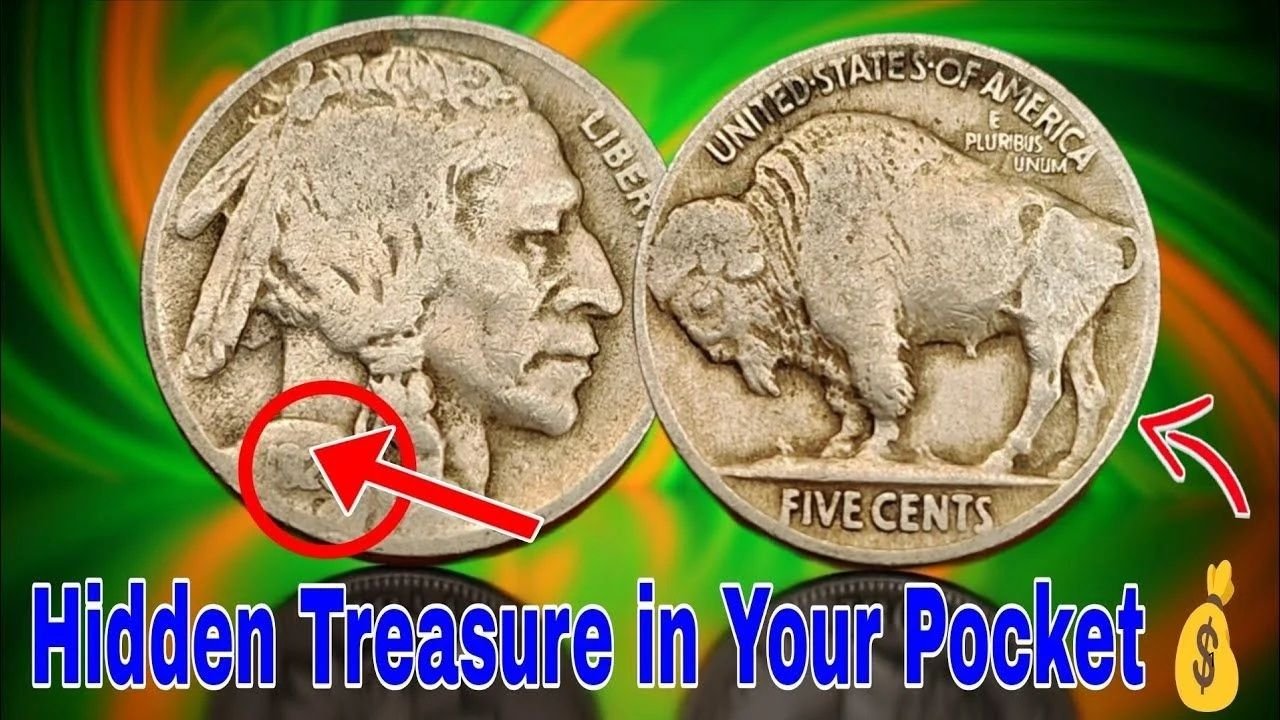
Some of history’s most remarkable treasures are discovered not in far-off lands, but in the unassuming corners of everyday life. The story of a Buffalo Nickel, once spent as part of a teenager’s pizza payment, exemplifies this truth. Decades later, this ordinary coin was recognized as a numismatic marvel, ultimately earning a place in a museum for the public to admire. Beyond its monetary value, the coin’s journey reveals the hidden histories embedded in the objects we handle daily, and the expertise required to bring them to light.
An Ordinary Beginning: A Coin in Circulation
Every coin begins its life in circulation, often overlooked as it passes from hand to hand. This particular Buffalo Nickel spent its early years quietly moving through everyday transactions, its surface worn smooth by countless hands. In 2007, it played its final mundane role when it was used to pay for a pizza in Pennsylvania. At the time, it was valued at just five cents, its true significance hidden beneath a century of ordinary use.
Complete Information: The 1918/7-D Buffalo Nickel
| Feature | Details |
|---|---|
| Coin Series | Buffalo (Indian Head) Nickel |
| Years Minted | 1913–1938 |
| Designer | James Earle Fraser |
| Obverse Design | Composite portrait of a Native American chief with “LIBERTY” |
| Reverse Design | American Bison on a mound; inscriptions: “UNITED STATES OF AMERICA,” “E PLURIBUS UNUM,” “FIVE CENTS” |
| Key Variety | 1918/7-D Overdate – the “8” stamped over a “7” from a previous year’s die |
| Mint Mark | “D” (Denver Mint), below “FIVE CENTS” |
| Estimated Survivors | Approximately 200 coins |
| Primary Value Factors | Rarity, certified authenticity, provenance |
| Current Status | On public display at the American Numismatic Association Museum, Colorado Springs |
Recognition: Expertise Meets Opportunity

The coin’s journey took a pivotal turn when it appeared at a local coin shop years later. The shop owner, a seasoned numismatist, examined the nickel with a trained eye. Subtle details—such as slight doubling in the buffalo’s design and a curious layering of the date—indicated this was no ordinary coin. Detailed reference catalogs confirmed the stunning identification: a 1918/7-D overdate Buffalo Nickel, one of the rarest minting errors in American coinage.
Understanding the 1918/7-D Overdate
The value of this nickel lies in its unique minting error. In 1918, a die from the Denver Mint mistakenly stamped a coin with the “8” over a partially struck “7” from 1917. This overdate error was quickly corrected, but roughly 200 of these coins entered circulation. Despite its wear from decades of everyday use, this circulated state authenticates its extraordinary journey through American life and highlights its scarcity in the modern market.
From Auction to Museum
Following authentication, the nickel entered the world of serious collectors, culminating in a high-profile auction in 2024. Even in a well-worn state, its rarity and fascinating backstory drove competitive bidding, resulting in a final sale price of $601,000. In a remarkable conclusion, the anonymous winning bidder donated the coin to the American Numismatic Association Museum in Colorado Springs. This gesture transformed a private collectible into a public treasure, allowing countless visitors to appreciate its historical significance.
The Enduring Legacy of the Buffalo Nickel
The Buffalo Nickel, minted from 1913 to 1938, remains a beloved symbol of American coinage. James Earle Fraser’s obverse composite portrait honored Native American heritage, while the reverse immortalized Black Diamond, a bison from New York’s Central Park Zoo. Its design, celebrated for both artistry and cultural resonance, has captivated collectors for generations. The rare 1918/7-D overdate adds a layer of intrigue—a human error frozen in metal that has become a central chapter in the coin’s storied legacy.
Lessons in Observation and Preservation
This nickel’s journey from a pizza payment to a museum exhibit underscores the power of curiosity, expertise, and careful preservation. While discovering such a rarity is exceedingly uncommon, it serves as a reminder to examine the ordinary with an attentive eye. Every coin carries a story of artistry, industry, and human experience, waiting for those with knowledge and patience to uncover it.
Frequently Asked Questions
Q1: What is an overdate error?
A: An overdate occurs when a die is repurposed, and a new date is stamped over an older one. This results in a visible layering of numbers, a rare and valuable minting anomaly.
Q2: Why is this heavily worn coin so valuable?
A: With only around 200 known examples, rarity outweighs condition. Its survival and verified identification make it exceptionally desirable.
Q3: How can I identify the 1918/7-D overdate?
A: Examine the date with magnification, looking for a faint “7” beneath the “8,” often visible in the lower curve. Compare with certified images from grading services like PCGS or NGC.
Q4: Should I clean my coins?
A: No. Cleaning damages the original surface and drastically reduces collectible value. Always handle coins by the edges and store them in protective holders.
Q5: Where can I learn more?
A: Resources like the American Numismatic Association, PCGS CoinFacts, and NGC Coin Explorer provide extensive guides, photo archives, and population data.
A Final Reflection
The story of this Buffalo Nickel demonstrates that history is not confined to books or museums—it circulates among us, carried in everyday objects. While most coins will never achieve fame or fortune, each carries the imprint of its era. This nickel reminds us to observe closely, appreciate the artistry in the ordinary, and recognize that extraordinary discoveries often begin with a simple, curious glance.