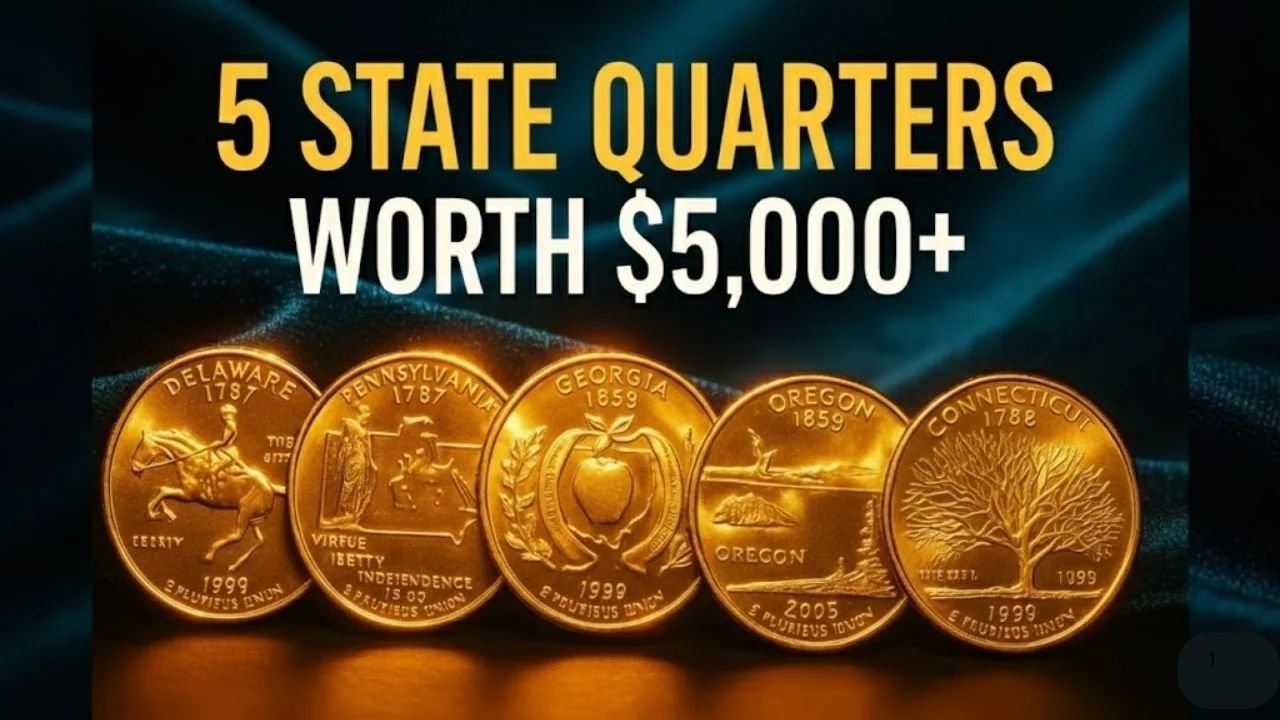
Most people treat quarters as mere pocket change, but a few coins from the U.S. State Quarters Program quietly defy that perception. Due to rare minting errors, certain quarters that remain in circulation today carry values exceeding $5,000. These coins often look ordinary at first glance, which allows them to slip unnoticed through everyday transactions. For collectors, the thrill lies in discovering these hidden treasures in the most mundane of places.
Why Mint Errors Turn Common Coins Into Collector Gold
The State Quarters Program produced billions of coins between 1999 and 2008, yet human and mechanical mistakes occasionally created unique varieties. Dies can crack, design elements can fill with grease, or coins can be struck off-center. Such errors were typically corrected quickly, leaving only a handful of affected coins in circulation. For collectors, rarity and the visibility of the error matter far more than condition alone, making these mistakes highly sought after.
Valuable State Quarter Errors: A Quick Overview
| State & Year | Error Type | Estimated Value Range | Why It’s Valuable |
|---|---|---|---|
| Georgia 1999 | Wavy Flag Design | Up to $7,000 | Early production anomaly |
| Wisconsin 2004 | Extra Leaf (High/Low) | $6,000–$10,000 | Highly visible design flaw |
| Kansas 2005 | “In God We Rust” | Up to $5,000 | Missing lettering due to grease |
| Delaware 1999 | Spitting Horse | $5,000+ | Distinctive die crack effect |
| South Carolina 2000 | Off-Center Strike | $5,000–$7,000 | Misaligned strike |
Georgia’s Wavy Flag Quarter
Some 1999 Georgia state quarters show a subtle distortion in the flag, giving it a wavy appearance rather than straight lines. This error occurred during early production and was corrected before most coins were released. High-grade examples of this variant have sold for thousands of dollars, demonstrating how a minor deviation can dramatically increase a coin’s value.
Wisconsin’s Extra Leaf Surprise
The 2004 Wisconsin quarter is one of the most talked-about modern error coins. Certain cornstalk designs display an extra leaf, creating two recognized varieties: high leaf and low leaf. The clarity and visibility of this mistake make it highly desirable, with well-preserved coins regularly commanding prices in the thousands.
Kansas’ “In God We Rust” Coin
A minting issue in 2005 caused some Kansas quarters to omit part of the word “Trust” in the national motto, resulting in the phrase “In God We Rust.” Grease in the die blocked the design, creating a highly collectible error. Coins showing this anomaly in strong condition have become prized items among collectors, sometimes selling for substantial sums.
Delaware’s Spitting Horse Effect
Among early state quarters, the 1999 Delaware issue features a horse and rider design. Some coins developed a small die crack, giving the illusion that the horse is spitting. While subtle, this effect is distinctive and sought after. Coins with minimal wear and a strong strike are especially valuable, sometimes reaching over $5,000.
South Carolina’s Off-Center Strikes
Off-center strikes occur when a coin isn’t aligned properly during minting, shifting or truncating the design. Some 2000 South Carolina quarters exhibit this error. The more pronounced the misalignment and the better the coin’s condition, the higher its value. These coins appeal to collectors because the error is immediately visible, creating an instant connection between history and curiosity.
How to Spot a Valuable Quarter
You don’t need specialized equipment to identify a rare quarter, but attention to detail is essential:
- Examine Designs Closely: Look for missing letters, extra elements, or misaligned imagery.
- Set Aside Unusual Coins: Coins that appear different should be preserved and evaluated by a knowledgeable dealer.
- Consider Professional Grading: Services like PCGS or NGC can authenticate and grade coins, often enhancing their resale value.
- Avoid Cleaning: Polishing or chemical cleaning destroys patina and can significantly reduce value.
Frequently Asked Questions
Are these quarters really still in circulation?
Yes. Because these error coins were never recalled, some continue to appear in everyday change.
Do all coins from these years have errors?
No. Only a small fraction display these specific anomalies; most coins are ordinary.
Is professional grading necessary?
For high-value coins, authentication and grading help confirm legitimacy and can improve selling outcomes.
Where should rare quarters be sold?
Reputable coin dealers, major auction houses, and trusted online marketplaces are the safest options.
A Final Thought
Rare coins are not always confined to collections or museums. Some quietly circulate in pockets, jars, or drawers, waiting to be discovered. By taking a moment to inspect your spare change, you may uncover an extraordinary piece of history. Even a single minting error can transform a simple quarter into a remarkable collector’s treasure.