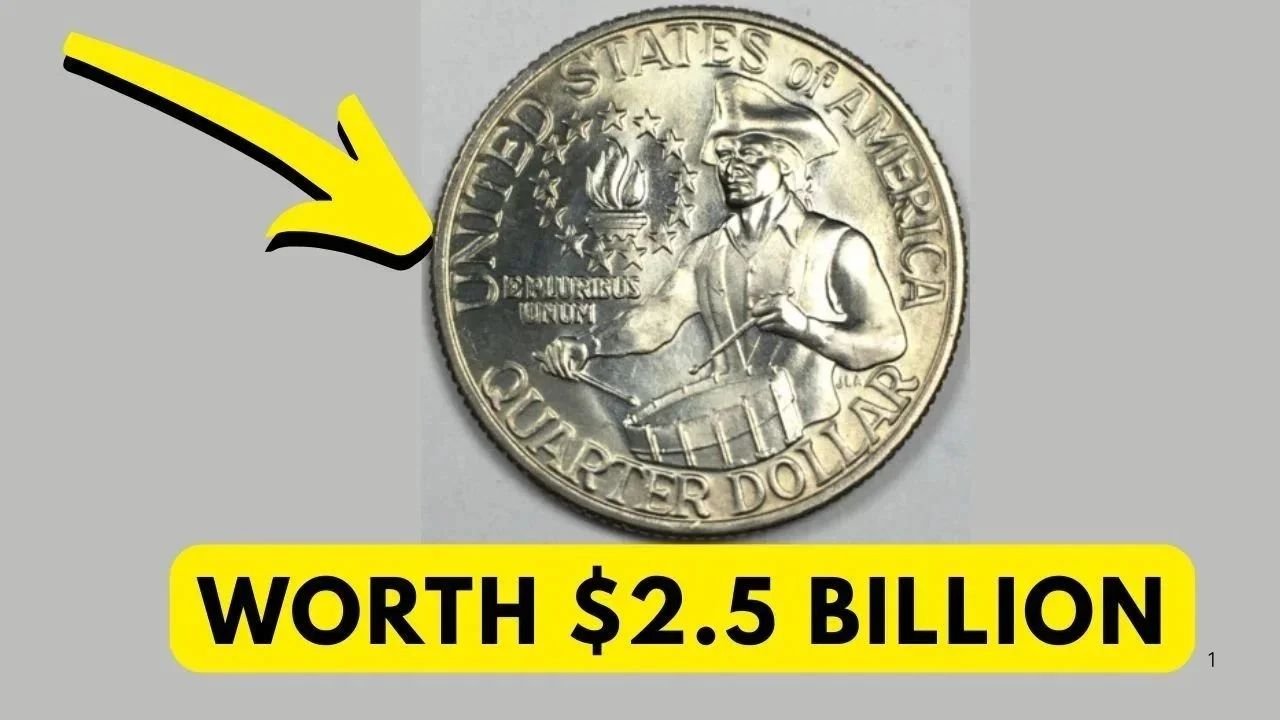
Most people view a quarter as a small, everyday token, yet some coins carry stories and values that extend far beyond their face. Among these, the Bicentennial quarter has achieved legendary status. Minted to celebrate the 200th anniversary of the United States, this coin blends history, symbolism, and rare minting circumstances. While millions circulated, a handful of extraordinary examples have captured worldwide attention, with valuations in private collector circles reportedly reaching an astonishing $2.5 billion.
The Birth of the Bicentennial Quarter
Issued in 1975 and 1976, the Bicentennial quarter commemorated the nation’s 200th birthday. Departing from the familiar eagle design, the coin’s reverse features a colonial drummer, representing unity and the spirit of independence. These quarters were released into everyday circulation, becoming a familiar sight in wallets and cash registers. Hidden among these ordinary coins, however, are a few exceptionally rare examples, often distinguished by errors or unusual production traits.
Full Information Table: Bicentennial Quarter Overview
| Feature | Details |
|---|---|
| Coin Type | Bicentennial Quarter |
| Years Issued | 1975–1976 |
| Face Value | 25 cents |
| Reverse Design | Colonial drummer |
| Purpose | 200th anniversary of U.S. independence |
| Rare Variants | Error strikes, special finishes |
| Estimated Top Valuation | Up to $2.5 billion (elite collector assessments) |
| Circulation Status | Some believed to remain in circulation |
| Best Authentication | PCGS or NGC grading |
What Makes Certain Bicentennial Quarters Exceptionally Valuable
The extreme valuations attributed to a few Bicentennial quarters are not simply a product of age. Their worth is driven by a combination of scarcity, unique minting characteristics, and strong collector demand:
- Minting Errors: Some coins exhibit doubled dies, off-center strikes, or irregular finishes, creating one-of-a-kind pieces that were never intended to leave the mint.
- Special or Experimental Runs: A tiny number may originate from limited experimental productions, further enhancing rarity.
- Collector Demand: Emotional and historical significance amplifies interest. Coins tied to national milestones often carry both nostalgic and financial value, prompting competitive bidding among collectors.
The Role of History in Valuation
Coins that symbolize major national events often transcend their material worth. The Bicentennial quarter embodies a unique historical moment, representing reflection, independence, and unity. When such coins exist in extremely limited numbers, collectors assign extraordinary value based on both rarity and cultural significance. In elite circles, some of these ultra-rare quarters are discussed as among the most valuable modern U.S. coins ever identified.
Could a Rare Bicentennial Quarter Still Be in Circulation?
Surprisingly, yes. Because most Bicentennial quarters appear nearly identical at first glance, rare variants can easily go unnoticed. Over the decades, valuable coins have surfaced in old jars, inherited collections, and even everyday transactions. This possibility fuels ongoing interest and vigilance among collectors, who remain hopeful that a historic discovery might still be hiding in plain sight.
How to Examine Your Quarter
If you’re curious about your Bicentennial quarters, follow these steps:
- Observe Carefully: Ensure the date reads 1975 or 1976, and check for the colonial drummer design. Look closely for unusual surface textures or irregularities.
- Check for Mint Marks and Errors: Look for doubled lettering, unusual finishes, or off-center strikes that differentiate the coin from standard circulation pieces.
- Avoid Cleaning: Cleaning can permanently damage a coin’s surface and reduce its value. Handle it by the edges and store it safely.
- Seek Professional Evaluation: Consult a reputable numismatist or submit the coin to a recognized grading service for authentication and proper assessment.
Why Coin Collecting Fascinates
Coin collecting connects everyday objects to history, art, and discovery. Each coin is a miniature time capsule, preserving stories that might otherwise fade. The Bicentennial quarter exemplifies this principle, combining symbolic design, national memory, and the thrill of uncovering something extraordinary. For collectors, the excitement lies in preservation, research, and the occasional lucky find.
Frequently Asked Questions
Why was the Bicentennial quarter created?
It commemorated the 200th anniversary of U.S. independence, celebrating national history through coin design.
Are all Bicentennial quarters valuable?
No. Most are worth only their face value, but rare varieties with errors or special finishes can be highly prized.
How can I tell if my quarter is rare?
Look for unusual details such as doubled lettering, off-center strikes, or uncommon finishes, then seek professional evaluation.
Is it possible to find a rare coin in everyday change?
Yes. Because these quarters were widely circulated, rare examples could still exist outside of collections.
Should I sell a suspected rare coin immediately?
No. Proper authentication and grading are essential to understanding true value before considering a sale.
A Thought to Carry Forward
The Bicentennial quarter demonstrates that history can hide in the most ordinary places. While the odds of finding an ultra-rare example are slim, the act of searching connects people to the past in meaningful ways. Every coin tells a story, and occasionally, that story is extraordinary—reminding us that even the smallest objects can carry immense historical and cultural significance.