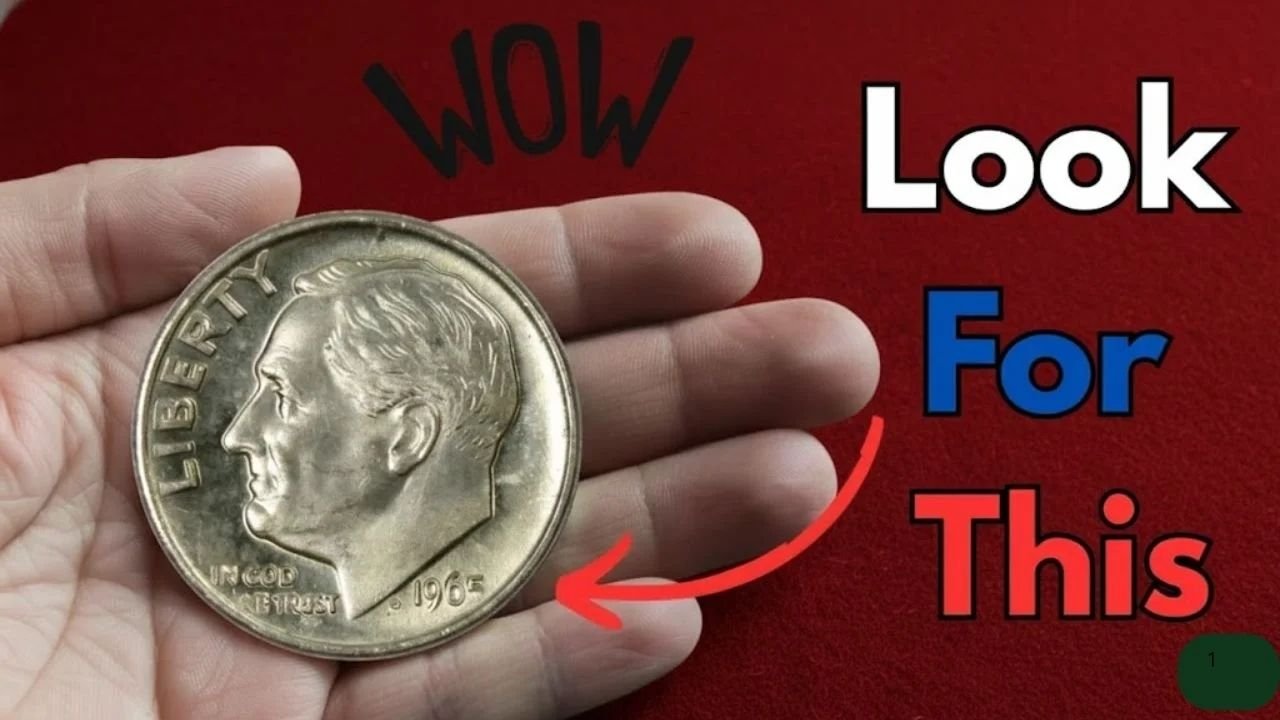
Every day, millions of Roosevelt dimes circulate in the United States, buying coffee, paying for parking meters, and exchanging hands countless times. To most, they are merely ten cents—a small, silver-colored disk we barely notice. Yet hidden within these ordinary coins is a story of history, craftsmanship, and the rare possibility that an everyday dime could be something extraordinary. This isn’t about instant riches, but about a tangible connection to America’s past that might be hiding right in our pockets.
The History Behind the Roosevelt Dime
The Roosevelt dime was first minted in 1946, shortly after the passing of President Franklin D. Roosevelt. FDR’s leadership through the Great Depression and World War II, as well as his lifelong advocacy against polio, inspired a national desire to honor his legacy. The dime was chosen because of its association with the “March of Dimes,” the fundraising campaign he championed to fight polio.
Designed by Chief Engraver John R. Sinnock, the coin is a masterclass in subtle symbolism. Roosevelt’s determined profile graces the obverse, while the reverse displays a torch of liberty, flanked by an olive branch for peace and an oak branch for strength—an emblematic message for a postwar nation. From the start, the dime became more than currency; it was a circulating tribute to a beloved leader.
Roosevelt Dime: Numismatic Overview
| Aspect | Details | Collector Significance |
|---|---|---|
| First Minted | 1946 | Posthumous tribute replacing the Mercury dime |
| Designer | John R. Sinnock (“JS” initials under Roosevelt’s neck) | Masterpiece of subtle artistry |
| Key Composition | 1946–1964: 90% Silver, 10% Copper; 1965–Present: Copper-Nickel Clad | The 1964–1965 transition year is notable for rare errors |
| Notable Varieties & Errors | 1965 Silver Planchet Error, 1982 “No P” Mint Mark, 1975-S “No S” Proof, Various Doubled Die Obverses | Holy grails for specialists |
| Mint Marks | P (Philadelphia), D (Denver), S (San Francisco) | “S” marks were used for proof and collector coins |
| Condition Scale | Poor to Mint State 70 (perfect) | Grade is the primary driver of value beyond rarity |
| Valuable Finds | Brilliant uncirculated coins or clear error coins | Multi-million-dollar claims are sensational, but documented finds range $100–$10,000+ |
When Ordinary Coins Become Extraordinary
Most Roosevelt dimes are worth their ten-cent face value. However, numismatics shows that certain factors can transform a common coin into a highly prized collectible:
- Exceptional Preservation: Coins that retain their original luster, untouched by commerce, are rare. Condition, graded on a 70-point scale, significantly influences value.
- Human or Mechanical Errors: Doubled dies, off-center strikes, or other minting anomalies create unique coins that are sometimes discovered decades later.
- Material and Alloy Changes: Dimes minted from 1946 to 1964 were 90% silver. In 1965, the U.S. Mint transitioned to copper-nickel clad coins. Rare errors, like 1965 silver strikes or the 1975-S “No S” proof, are highly sought after.
The Thrill of Discovery
Could a dime of immense value still be circulating today? While rare, it’s possible. Historical finds like the 1965 silver error or the 1982 “No P” dime prove that coins can reappear unexpectedly. Often, coins from proof sets are accidentally spent, or forgotten pieces resurface after decades in drawers or coin jars. The hunt is as much about the thrill of discovery as it is about financial gain.
How to Examine Your Dime Like a Collector
- Listen and Feel: Pre-1965 silver dimes have a softer ring than modern clad coins. They also lack the copper-brown edge of post-1965 coins.
- Check Mint Marks: The obverse above the date shows “P,” “D,” “S,” or none. These marks indicate where the coin was struck and can signal potential rarity.
- Look for Anomalies: Examine the lettering of “LIBERTY” and the date. Doubling, off-center strikes, or unusual surfaces may indicate an error.
- Do Not Clean: Cleaning can destroy a coin’s value. Store it in a soft cloth or protective holder.
- Seek Professional Evaluation: Consult a certified coin dealer or submit the coin to a grading service like PCGS or NGC for authentication.
Frequently Asked Questions
Q: Is there really a Roosevelt dime worth $23.7 million?
No. Claims of dimes selling for tens of millions are internet folklore. Documented high-value coins, like rare proofs or errors, reach hundreds of thousands, not millions.
Q: Which Roosevelt dime is the most valuable?
The 1975-S “No S” proof dime is among the most famous. Only two are known, with one selling for over $500,000. Exceptional examples of early errors or uncirculated coins can also fetch high prices.
Q: I found a 1965 dime that looks silver. What should I do?
Check the edge. A genuine silver 1965 dime will have a solid silver edge, unlike the copper-nickel clad version. Handle carefully and seek professional verification.
Q: Are all pre-1965 dimes valuable?
They hold silver value (around $2 as of 2025). Significant numismatic value requires exceptional grade or rare mint/date combinations.
Q: Why is finding a rare coin exciting?
It’s the ultimate “thrill of the hunt,” connecting everyday life to history and uncovering a secret artifact passed through countless hands.
A Final Thought
The Roosevelt dime reminds us that value is multifaceted. Its face value is ten cents, its historical significance as a tribute is immeasurable, and its potential numismatic worth rewards curiosity and careful observation. By appreciating design, history, and rarity, even a humble dime can reveal a moment of wonder, connecting the present to the stories of the past.